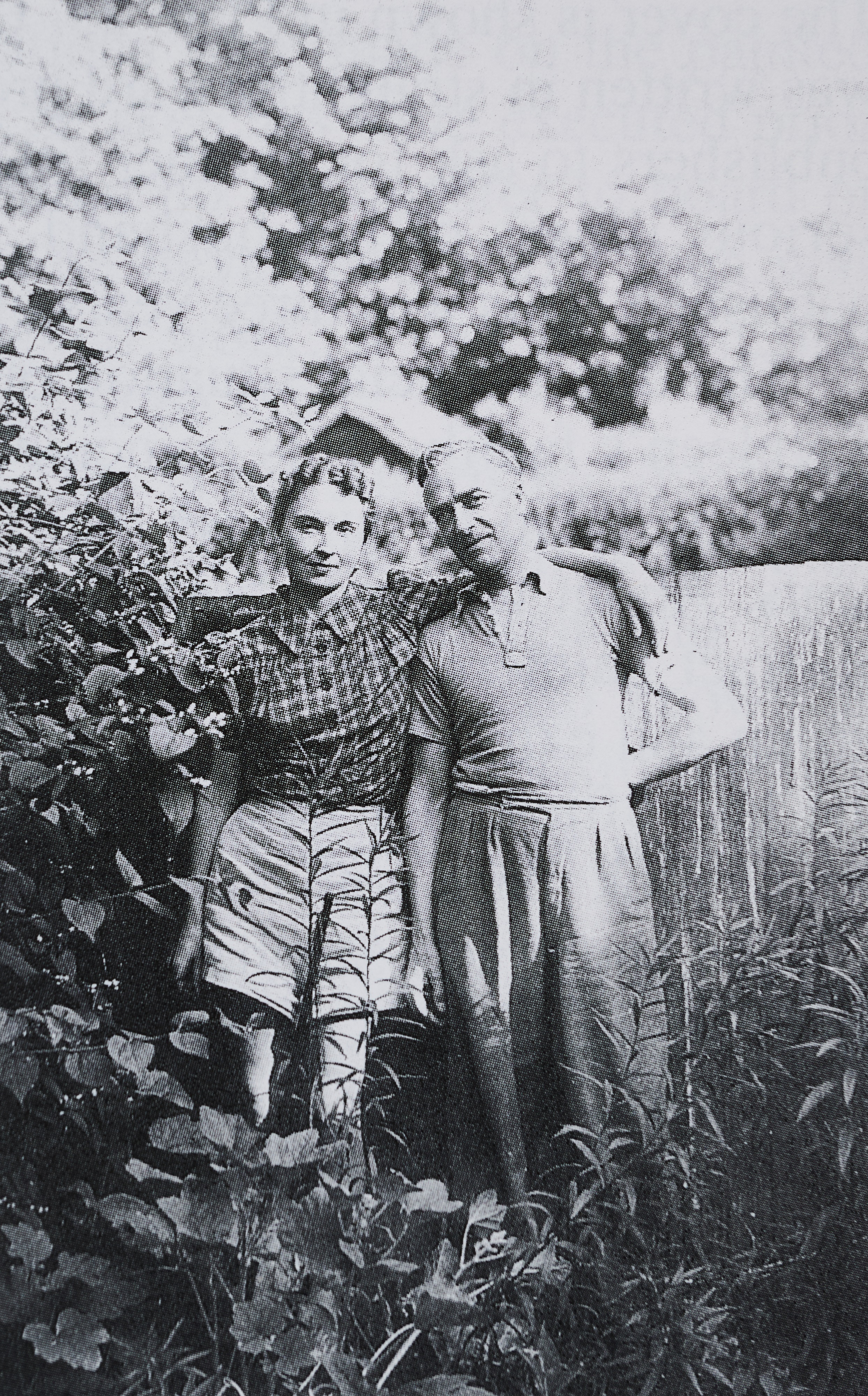
KATHLEEN GUTHRIE
Nationality: BRITISH
Dates: 1905-1981
She makes one realise that one already knew it, but had never seen it with quite that intensity, that quick eye for a silhouette or that gentle feminine touch of humour, [Kathleen Guthrie] is an interpreter.
Eric Newton, 1945
Eric Newton, leading critic and broadcaster of the day, was quick to appreciate how Kathleen Guthrie incorporated everyday life into her work with a certain wry understatement in his review of her exhibition at the Little Gallery, Piccadilly. Likewise, in his monograph on the artist Jonathan Eastaway comments how ‘Kathleen Guthrie was an inveterate people watcher, who found the behaviour of human beings and the humour that it inspired a source of endless fascination.’ (Eastaway, A Poet’s Eye, p. 5). The fruits of the artist’s unassuming deadpan observations are in abundant evidence in the following four lots.
All four works were painted in Hampstead, where Guthrie lived for the majority of her adult life, initially with her first husband, the painter Robin Guthrie, subsequently with her second husband, artist John Cecil Stephenson, and when widowed after the latter’s death in 1965. Like Kathleen, Robin Guthrie had been a pupil at the Slade where they had both studied under the influential Henry Tonks. The couple wed in secret in 1927 when Kathleen was at the Royal Academy Schools and began married life together living and working in an old chapel at 7 Park Hill, Hampstead, which they shared with the painter Rodney Burn. Good fortune followed when Tonks recommended Robin Guthrie and Burn for teaching positions at the Boston School of Fine Art in Massachusetts. In the USA, with a baby boy in tow, the Guthries enjoyed a vastly improved standard of living. Kathleen’s own work blossomed, and the intriguing whimsy of her subject matter found a ready audience. In an exhibition of her work at the Grace Horne Gallery, Boston a reviewer commented how ‘a delightfully humorous undercurrent is present in all her small figures.’
After the couple’s return to England two years later, however, although Kathleen showed with the Leicester Galleries, the New English Art Club, and at the Royal Academy, income from sales and portrait commissions was in short supply. Robin resorted to looking for teaching posts in London, embarked on an affair and the marriage collapsed. Kathleen was distraught, the rupture precipitating a nervous breakdown. However, her recovery coincided with her burgeoning acquaintance with John Cecil Stephenson.
Unlike her former husband, Stephenson enjoyed a position at the centre of the London avantgarde. Herbert Read called him ‘one of the earliest artists in the country to develop a completely abstract style.’ His studio at 6 Mall Studios in Hampstead had been that of Walter Sickert, and his neighbours were fellow modernists Ben Nicholson, Barbara Hepworth and Henry Moore. Kathleen’s marriage to Stephenson in 1942 heralded a renewal of her creative energies. She began exhibiting her work with the Women’s International Art Club (WIAC), serving on the selection committee, and together with Stephenson co-founded the Hampstead Arts Council (HAC), that subsequently became the Camden Arts Centre.
The incidental life of Hampstead Heath became her preferred subject matter. In the late 1940s HAC began exhibiting their work in the summer months by Whitestone Pond, Hampstead. There her talent was spotted by Kenneth Clark, recently retired from the directorship of the National Gallery, who purchased two of her paintings. In 1950 she was commissioned to decorate the Maternity and Child Welfare Centre on Haverstock Hill which drew extensively on her paintings of the Heath. The following year her work was the subject of an exhibition in Manchester at the Kalman Gallery recently established by Andras Kalman. Friends with the Czech designer Jacqueline Groag, she started designing fabric, took up silkscreen printing, and explored writing and book illustration for children, eventually publishing The Magic Button with considerable success in 1958.
Working in parallel with Stephenson, Kathleen was inspired to explore abstraction, and began to paint with acrylics, the flatness of which she found to her liking. She exhibited mainly abstract paintings at the New End Gallery in 1962, and a mix of abstract and figurative works in her retrospective at the influential Drian Gallery in 1966 set up by Halima Nalecz in Bayswater. Kathleen Goss in Art Review noted how Guthrie’s figurative works ‘…are delightful paintings of deliberately simplified and stylised figures. She invests them with the charm of Ardizzone’. Two years later Kathleen enjoyed being the subject of a joint exhibition of her and Stephenson’s work at the Brighton Pavilion. Subsequent solo exhibitions of her work during her lifetime were held at Camden Arts Centre; Erica Bourne Gallery, Golders Green and the Centaur Gallery, Highgate. Further afield she was the subject of shows at the Trentham Gallery, Emsworth; Forge House Gallery, Cookham and Coach House, Guernsey.